“Precision, Partnership, Purpose: Advancing Cancer Science to Save Lives Globally.”
This was the theme at the 2026 annual meeting for the American Association for Cancer Research (AACR). For many of the 22,000+ attendees last month, that single sentence is a distillation of their aims: for their science to save lives. For us here at 10x Genomics, it’s also a reflection of our own mission statement: to deliver tools that help you master biology to advance human health.
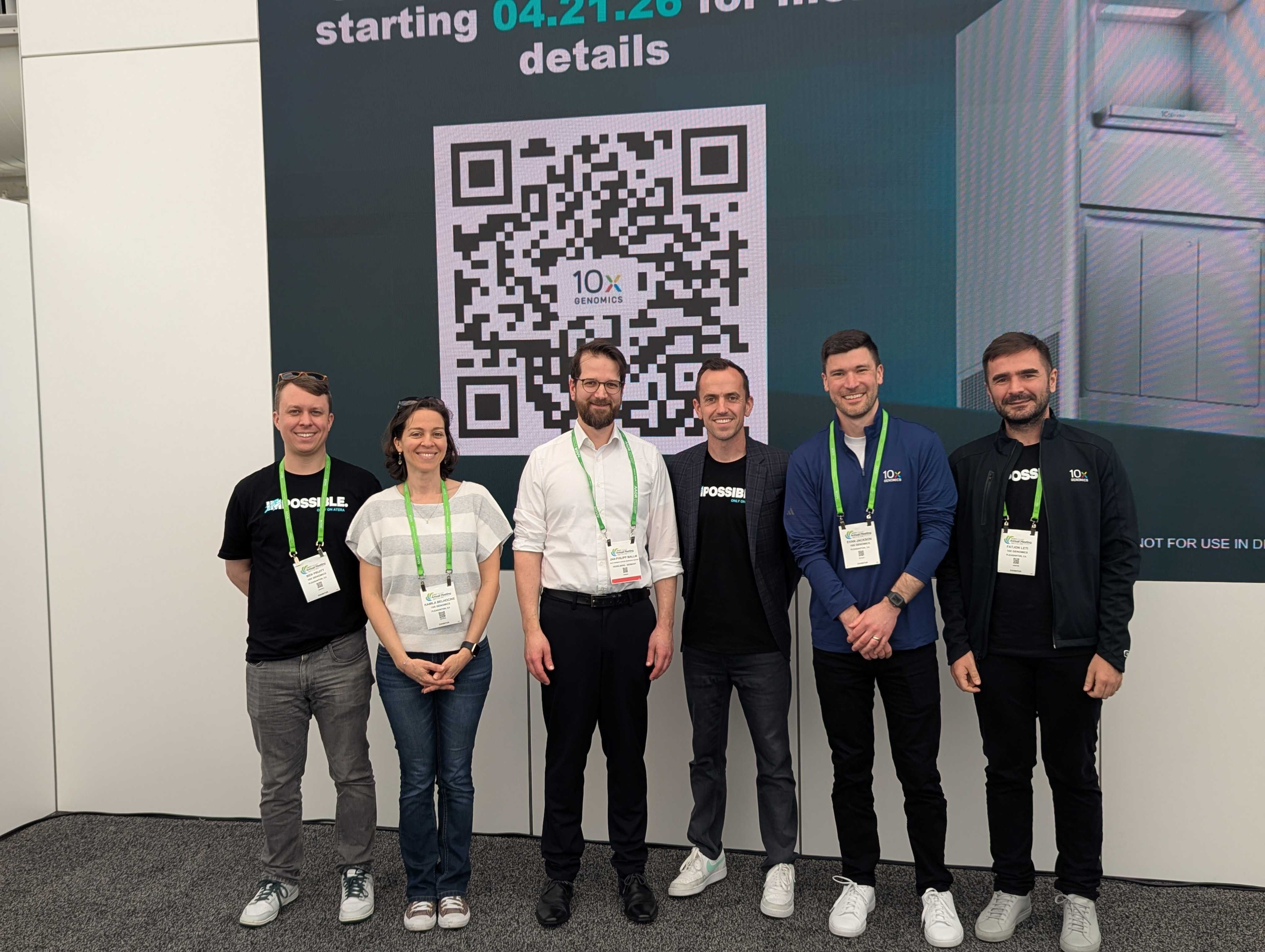
This mutual mission is why we revealed our newest platform, Atera in Situ, at AACR. Our presence centered around doing the impossible because that’s what we are asking you to do: to push the boundaries of discovery in translational research.
But to paraphrase physicist and inventor Robert Goddard, the impossible of yesterday is the hope of today, and the truth of tomorrow. So what impossible things will you make true tomorrow?
Setting the stage for Atera
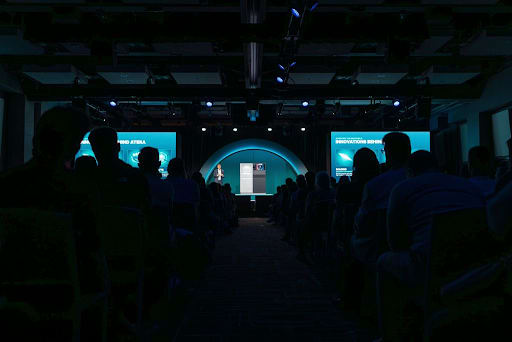
At 7 PM on April 18, Serge Saxonov, our CEO, kicked off AACR by highlighting the barriers and frustrations that researchers like you face every day. He touched on our shared mission, and what drives us. Then he revealed the impossible: Atera, an in situ spatial platform that enables whole transcriptome spatial analysis at unprecedented scale with subcellular resolution and sensitivity on par with our Chromium single cell assays.
Atera is more than spatial transcript detection: our roadmap includes end-to-end workflow automation, same-slide protein analysis, and base-by-base sequencing capabilities. During the show, our scientists gave poster presentations, which showcased how Atera was able to map the molecular heterogeneity of various cancers in exquisite detail. We released human FFPE cervical and breast cancer datasets so you can see the power of this platform firsthand.
As with every technology, the most exciting things aren’t from us but from researchers like you—because Atera early access customers had already started generating new discoveries with this platform.
The first of many impossible insights from researchers like you
"Whole transcriptome data resolved on a single cell level in the intact tissue. Everyone needs that, especially if you want to discover something new." –Dr. Jan-Philipp Mallm, Head, DKFZ Single Cell Open Lab, DKFZ
One such early access customer was Dr. Jan-Phillip Mallm, who focused on the breakthroughs driven by Atera he saw in cell mapping, annotation, and detection of rare cell types. He also highlighted Atera’s high-resolution profiling in colorectal cancer, which enabled tumor cell trajectory analysis: an impressive feat given he was using data that was, in his words, only days old.
During the opening plenary session, Carl June, MD (University of Pennsylvania) presented research that analyzed pre- and post-CAR T-cell treatments in glioblastoma subjects. Using Atera, Dr. June’s group showed a shift towards T/NK activation in samples from individuals who responded to treatment and tumor state remodeling in samples from individuals who did not respond positively. They hypothesized the myeloid cells they saw surrounding tumor cells could play a role in diminishing CAR T-cell effectiveness, highlighting the importance of not just cell composition, but emphasizing the importance of spatial localization within the tumor microenvironment.
Finally, though it was not announced at AACR, the Allen Institute capped off an exciting weekend of customer-driven Atera data by releasing publicly available Atera datasets from human skin and intestine that, “mapped gene activity in human tissue at an unprecedented depth and resolution.” Capturing the excitement for this new technology, Dr. Peter Skene (Senior Director, High Resolution Translational Immunology) said,
“[Before Atera] we were constantly making trade-offs in our studies. Whereas today with Atera, we don't have to make those compromises. We get to look at the entire [biological] system as a whole.”
Taking the next step into a brighter future
We live in a golden age of biomedical research, but for the millions of individuals (and their loved ones)suffering from cancer, dementia, autoimmune disorders, and other illnesses, a golden age hasn’t been enough. We need to accelerate discoveries. We feel these critical discoveries can be accelerated by seeing the full picture of biology in situ. In short, by doing the impossible.
And with Atera, we think you’ll have the tools to do it.
We’d like to thank everyone who stopped by to see us at AACR 2026. If you weren’t able to, check out our 10x Genomics World Tour to find a stop near you, or watch the Atera on-demand webinar for a deep dive into the future of spatial biology.
Atera and associated reagents are for Research Use Only. They are not intended for use in diagnostic procedures.