A 30-million-cell gauntlet: The Arc Institute’s challenge to build virtual cell perturbation models without training data
Peer perspective
Far more cells per lane at lower cost per cell enable large-scale perturb-seq experiments required for virtual cell training efforts.
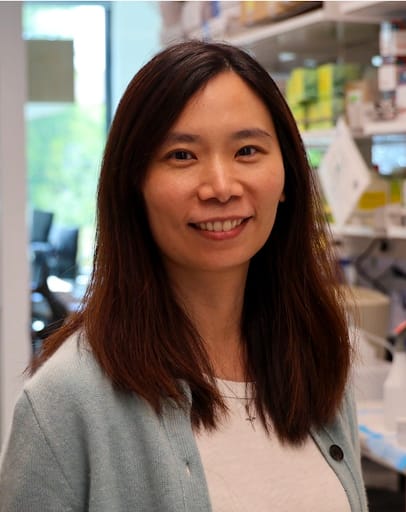
Po-Yuan Tung, Associate Director of Single Cell Technology Development, Arc Institute
The virtual cell moonshot
Scientists often rely on preclinical systems—animal models, cells in a dish—to understand perturbation effects. But assuming those systems reflect how human cells respond in their natural context is dangerous and has sent drug candidates to failure in clinical trials.
Cue the virtual cell. The ideal virtual cell model can predict the cellular response to any perturbation in any biological context. Input a perturbation (a gene mutation, a chemical cue, a small molecule) and a cell type, then get a mechanistic prediction of the effects in that cell.
The goal is wide utility, even for cell types and perturbations the model has never been trained on, called context generalization. Researchers at the Arc Institute, a nonprofit organization using AI to address challenges in biology and medicine, are at the forefront of efforts to build a general context virtual cell. Po-Yuan Tung, PhD, Associate Director of Single Cell Technology Development at Arc Institute, explains the biological need for this capability:
“Many of the cellular contexts we care about in human biology are difficult or impossible to perturb directly. Rare cell types, primary cells that do not expand outside the body, diseased cells that cannot be cultured faithfully, and tissue states that depend on their native microenvironment. A virtual cell becomes useful when it can take data from the experiments we can run and make better predictions in the contexts where new experiments are sparse, expensive, or unavailable.”
Through their Virtual Cell Challenge, Arc has galvanized a global community of scientists—this year, with a twist: participants must predict perturbation responses in cell lines their models have never seen.
The data behind the challenge—and future virtual cell models
Accuracy is critical: these models could one day support high-stakes preclinical decisions in drug discovery pipelines.
The Virtual Cell Challenge aims to close the gap between models and real human biology, though researchers need to evaluate how good their models are. This led the Arc Institute team to generate a ground-truth dataset that would provide real cellular responses to their target perturbations.
But they couldn’t use just any data. The team needed high-quality data that clearly linked a perturbation to a gene expression phenotype for individual cells on a massive scale—because their moonshot was 5,000 perturbations across six different cell lines.
“Consistent data quality is particularly critical for cross-context generalization, where technical artifacts and noisy measurements can obscure true biological signal,” explains Dr. Tung.
They chose a Flex Apex–based perturb-seq approach for three reasons: fixed samples that batch for high-throughput data generation; probe-based chemistry sensitive enough to minimize technical noise; and scale that drives down cost per cell.
With this approach, Arc Institute scientists achieved unprecedented scale and depth:
“Our experimental teams handled over 1 billion cells to ultimately generate deeply sequenced transcriptional profiles from over 30 million cells, producing roughly 4.8 trillion sequencing reads for all six cell lines…[and] we recaptured an average of ~1,000 cells per perturbation per cell line,” highlights Dr. Tung.
She adds, “Our method reproduces gold-standard perturb-seq phenotypes while achieving 4-fold cost reduction and 50% increased gene detection per cell.”
Beyond the operational benefits, the biological implication is direct. More genes detected per cell means a more complete view of perturbation effects—and better training data.
The “tip of the iceberg” for atlas-scale perturbation datasets
Can a global community of researchers build models that match the real responses captured in this 30-million-cell dataset? The jury is still out, but the gauntlet has been thrown.
Although this is one of the first experiments of its kind, Arc Institute scientists anticipate generating more atlas-scale training datasets:
“The scale of data necessary for a comprehensive virtual cell that can complete the context generalization task with high accuracy will be massive. These six cell lines are the tip of the iceberg, and Arc and others in the field will continue to build causal data at scale to fuel these models,” says Dr. Tung.
The tools to make the virtual cell feasible exist: high-throughput single cell workflows, lower costs, richer data from every cell. What’s been missing is causal data at scale. Arc is building it, and the field is invited.
Follow updates on the 2026 Virtual Cell Challenge at @arcinstitute, and go deeper on Arc’s training dataset in their preprint.
References:
- Arc Virtual Cell Initiative Team and Goodarzi H. Virtual Cell Challenge 2026: Benchmarking zero-shot generalization across cellular contexts. Cell 189: 5827–5830 (2026). doi: 10.1016/j.cell.2026.08.004
- Arc Institute (2026, August 20). The 2026 Virtual Cell Challenge: predicting perturbation responses in cell contexts a model has never seen. https://arcinstitute.org/news/virtual-cell-challenge-2026
- Arc Institute (2026, October 1). Generating high-quality Perturb-seq data for the 2026 Virtual Cell Challenge. https://arcinstitute.org/news/behind-the-data-virtual-cell-challenge-2026
- Swinderman J, et al. Scalable probe-based single-cell transcriptional profiling for virtual cell perturbation mapping and synthetic biology phenotyping. bioRxiv (2026). doi: https://doi.org/10.64898/2026.02.04.703058