Single cell with confidence

Higher quality data, proven results
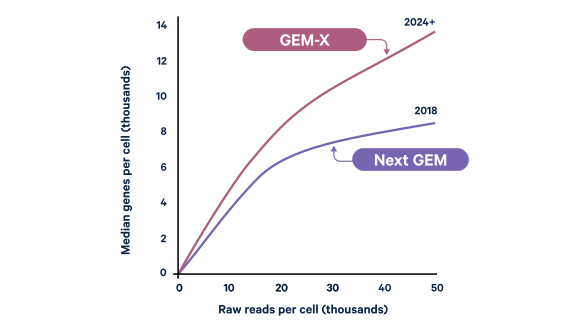
The newest version of Chromium (GEM-X) features higher sensitivity and more efficient sequencing than our previous Next GEM chemistry
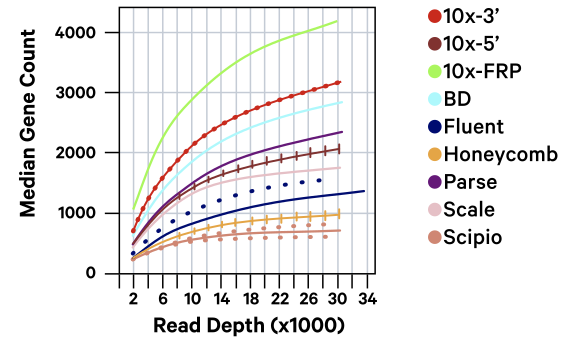
Next GEM assays lead performance in independent data comparison
Source: Reprinted from De Simone et al., 2025, under Creative Commons License
Improving on leading Next GEM assays with GEM-X technology
Performance improvements for GEM-X Universal 3' (2024) versus Next GEM Universal 3' (2018).
Additional independent data for GEM-X assays
Data for Universal 5' gene expression assays
Data for Universal 3' gene expression assays
GEM-X advancements versus Next GEM assays
Up to 2x
more genes
2x
more throughput
3x
faster run time
2x
lower multiplet rate
Recover more cells for more insights
Make the most of your sample with GEM-X Universal 3’
Discover why high cell recovery matters
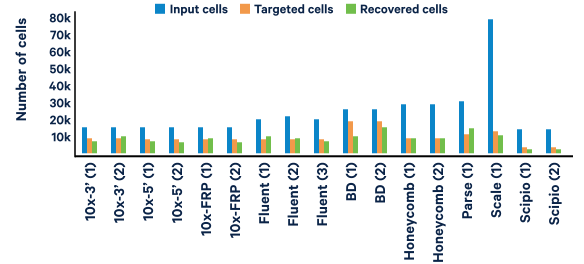
Chromium assays achieve targeted cell recovery with lowest cell input
Source: Reprinted from De Simone et al., 2025, under Creative Commons License
Identify rare cell types and detect rare transcripts
Improved detection of fragile cell types, including neutrophils
Achieve quality insights from precious samples and small cell volume
Recover up to 60% more of your sample compared to manual pipetting methods
Higher sequencing efficiency:
Detect more, sequence less
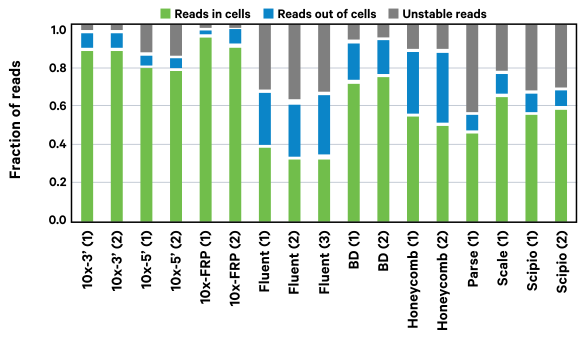
Source: Reprinted from De Simone et al., 2025, under Creative Commons License
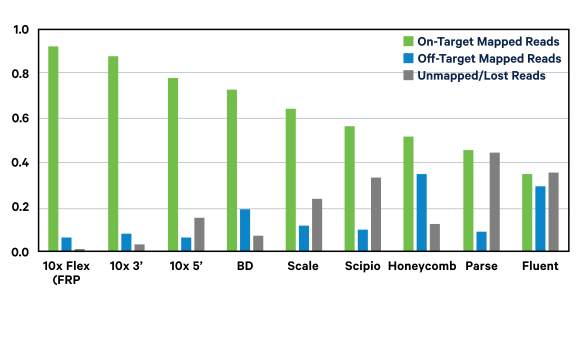
Source: Aggregated from Supplementary Table 4b from De Simone et al., 2025, under Creative Commons License
Scale without compromise
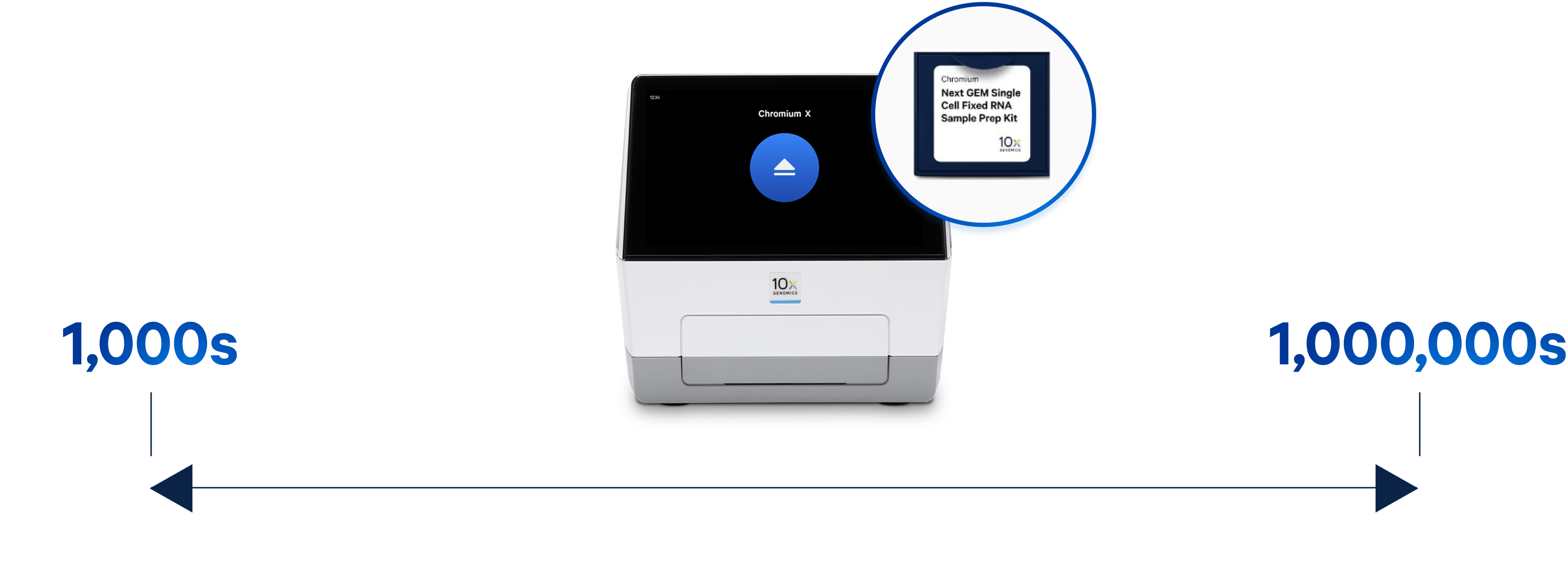
Profile 2.56 million cells per run, at <$0.01 per cell with GEM-X Flex
Get started at <$600 per sample, even at small scales, with easy On-Chip Multiplexing
Access the broadest range of multiomic applications and sample types
Sample types


Multiomic capabilities


Flex chemistry enables high-quality profiling of FFPE tissue
Value of full-length V(D)J and gene expression readouts
View full list of compatible samples
User Guides & Demonstrated Protocols
Peace of mind with every run
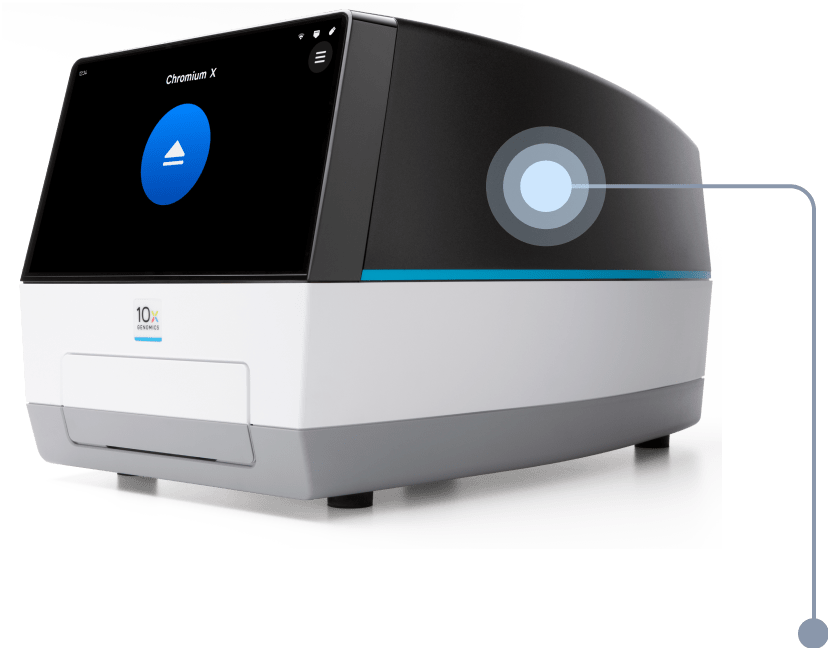

Filippov et al. in BMC Genomics (2024) found that '10x showed higher cell capture efficiency and lower inter-sample variability'

Fast, efficient protocols let you complete your workflow in 1 day—half the time of manual methods
Maximize results, minimize hidden costs
Chromium instrument-supported methods
Ensures consistent performance across experiments, users, and chips.
Minimizes handling and user errors with fast and reliable workflows.
Makes the most of your precious samples with cell recovery rates of up to 80%.
Gives higher return on your sequencing budget by letting you reduce reads by up to 50%.
Instrument-less methods

Introduces variability across users and assays with manual protocols.
Relies on long workflows with labor-intensive, error-prone methods.
Misses critical data from important cell populations with low cell recovery rates.
Increases sequencing costs since lower sensitivity requires more reads.