
New! Smaller kit options & lower per-sample costs
On-chip multiplexing with GEM-X Universal Multiplex enables high-performance, cost-effective single cell studies at any scale. Now, new kit options are reducing costs even more, so you can take your research further.
Low upfront costs with low risk from the trusted leader (8 samples for as little as $4,300 USD)
Accessible pricing on 16-sample kits, as low as $415 USD/sample
Easy, species-agnostic multiplexing: No upstream sample tagging
Species-agnostic single cell: High performance & accessible prices
Limits of other single cell assays
Time-consuming workflows with high risk for loss of precious samples
Lacking options for comprehensive analysis, including capture of transcript isoforms
Low performance and high variation, leading to low-quality, unreliable results
More off-target sequencing reads, requiring greater depth and more budget for sequencing
How Universal 3’ and 5’ enhance your research
Efficient, instrument-supported workflow with minimal handling and high cell recovery
Comprehensive analysis and multiomic options, including V(D)J sequencing and antigen specificity
High-quality data and exceptional reproducibility, delivering accurate insights
Reduced sequencing costs with more on-target, mapped reads and fewer unusable reads
Robust workflow options
Universal is perfect for...
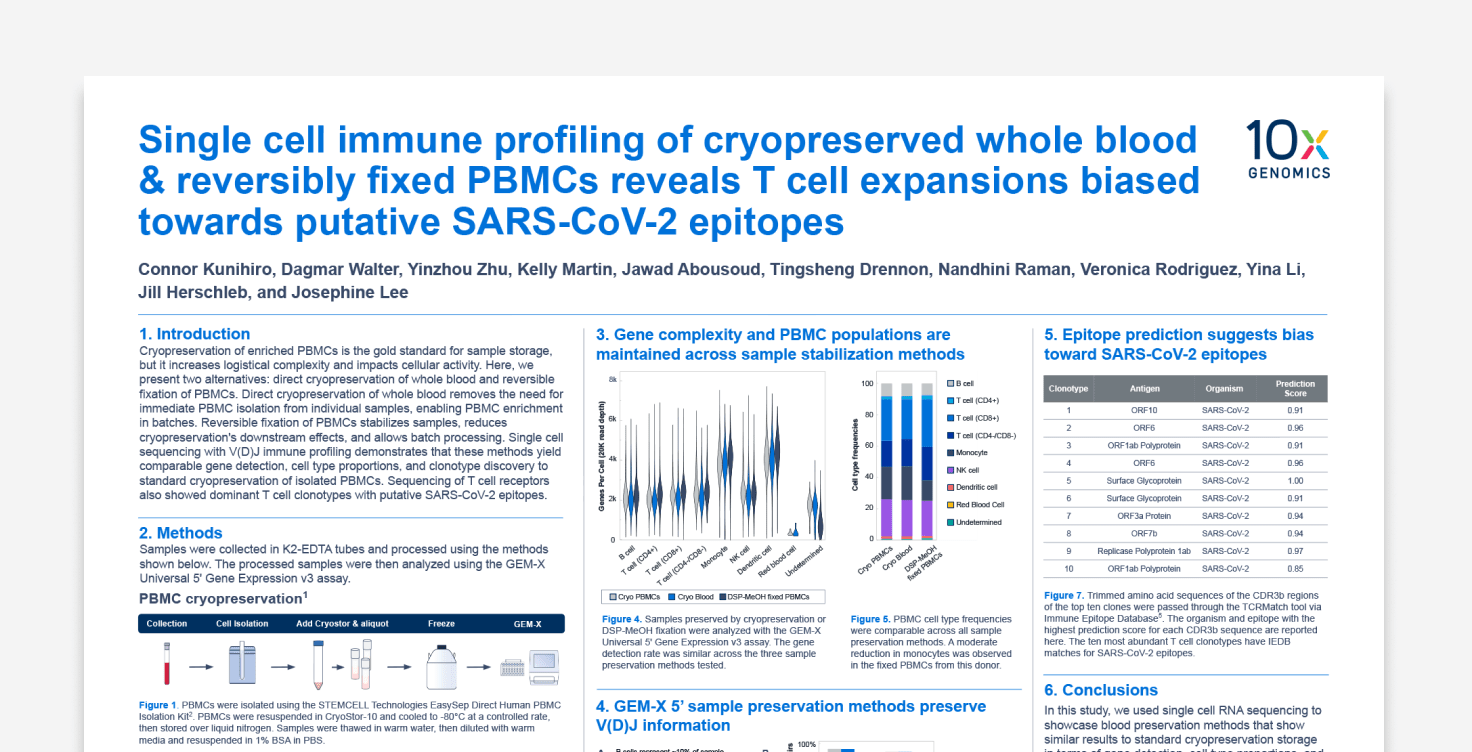
V(D)J profiling for preserved blood samples
Get the details on reversible PBMC fixation and whole blood cryopreservation for single cell immune profiling, including sample data from individuals with cancers or autoimmune disorders.
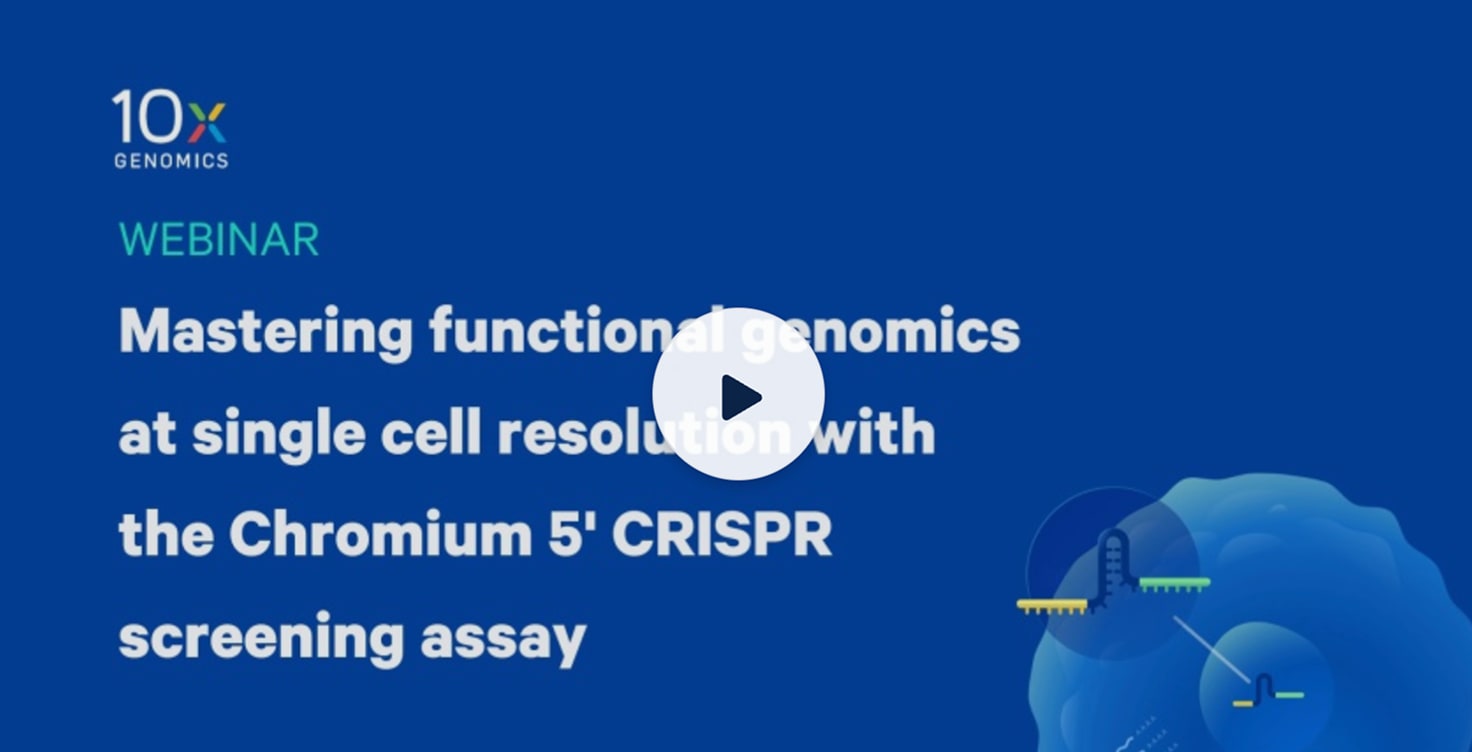
Multiomic 5’ CRISPR screens
Accelerate functional genomics studies with the ability to screen thousands of genes and capture cell surface protein and V(D)J receptor sequences alongside gene expression and CRISPR guides.
How researchers are using Universal 3’ and 5’

Understanding age-related immune dysregulation
See how researchers at the Allen Institute for Immunology built a 16M+ single cell atlas of the human immune system, resolving rare peripheral immune subtypes and analyzing patterns of change over time.
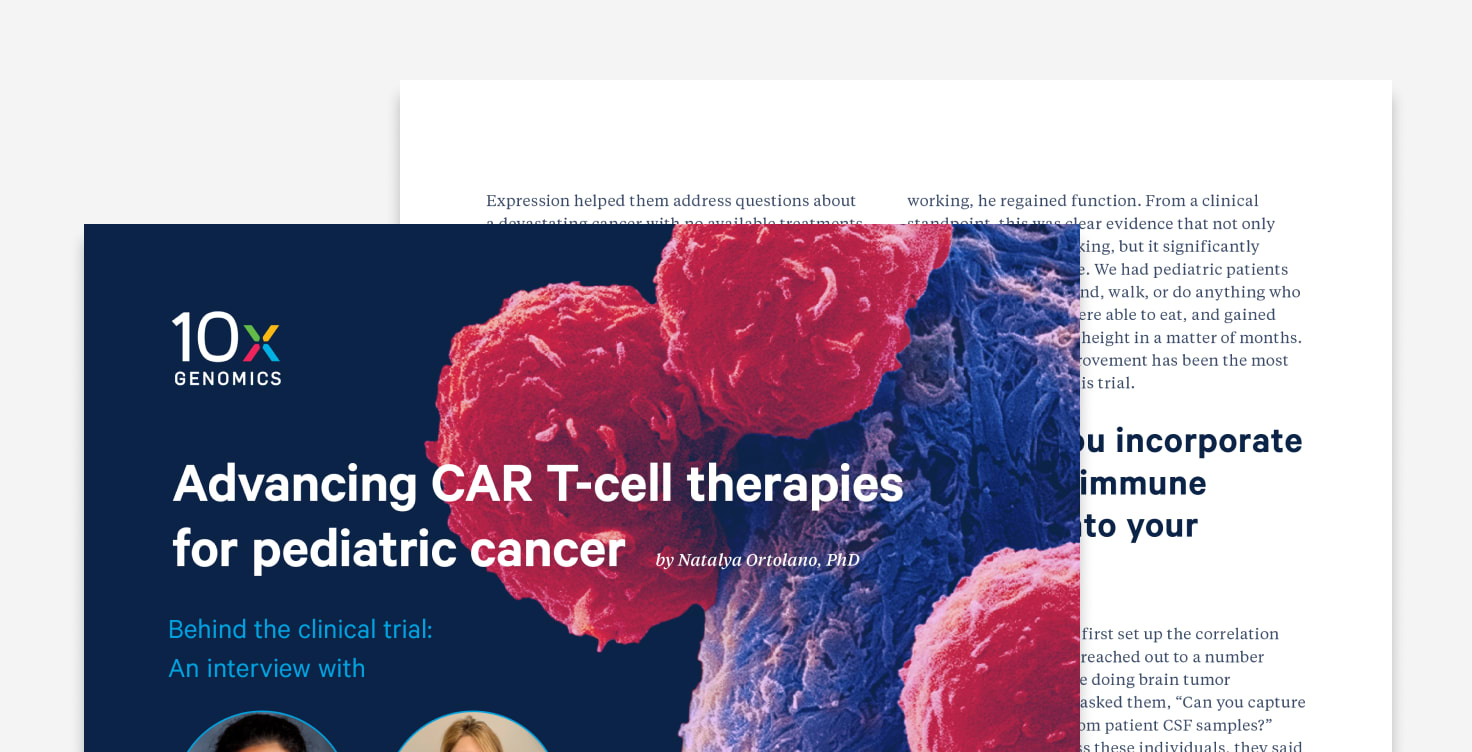
Advancing CAR T-cell therapies for pediatric cancer
Go behind the clinical trial—hear from researchers at Stanford University to see how they revealed a clearer picture of the effects of CAR T therapy on patient tumors in diffuse intrinsic pontine glioma.
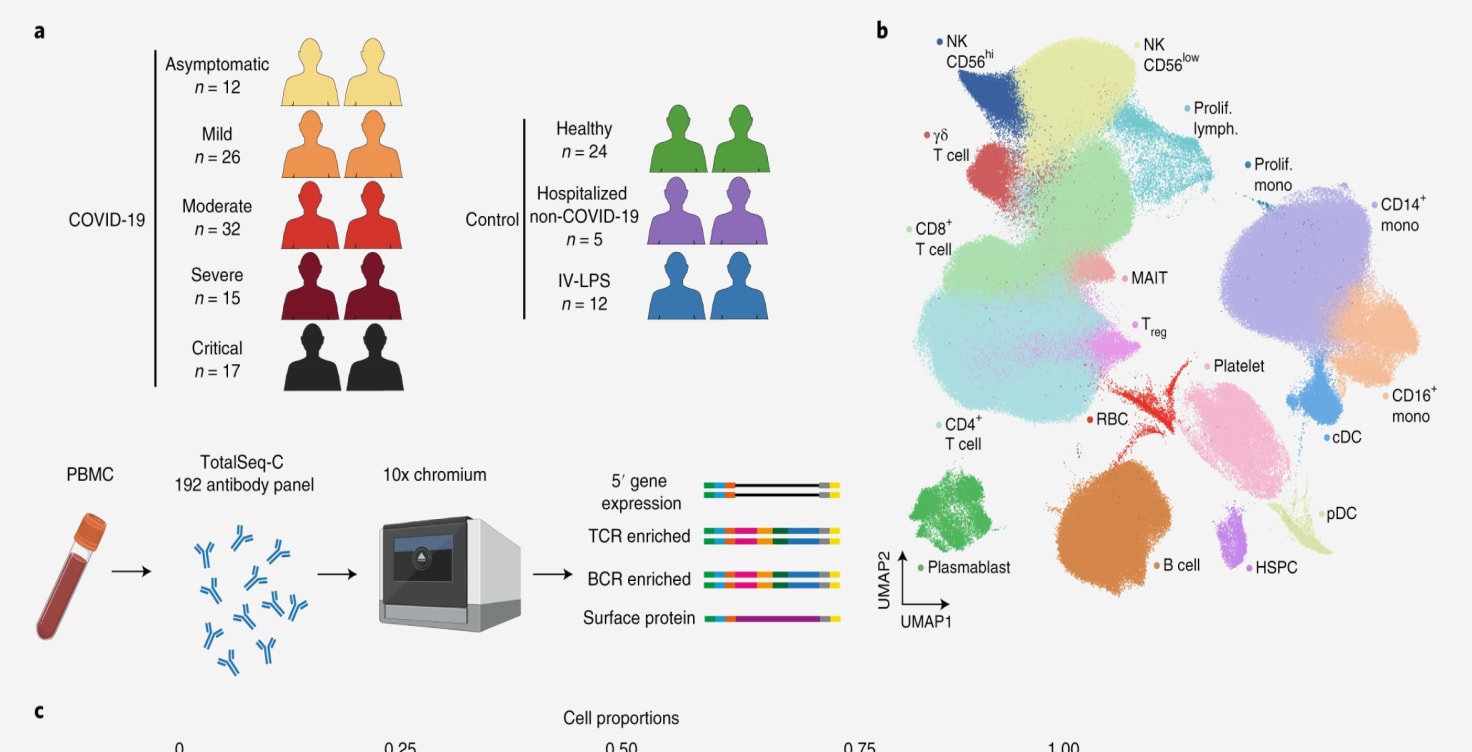
Identifying key factors in disease severity and therapeutic outcomes
Explore three large-scale studies that leveraged scRNA-seq to reveal biomarkers linked to severe cases of COVID-19 and hidden drivers of therapeutic response in metastatic melanoma.
Spotlight on immunology
Immunology Research Highlights
See how your peers are bringing clarity to the cellular mechanisms and signaling pathways at work in fields like autoimmunity, immuno-oncology, infectious disease, and beyond.Demonstrated Protocol: PBMC fixation
Streamline your workflow and improve consistency with this fixation protocol for freshly isolated and cryopreserved PBMCs for downstream 3’ and 5’ scRNA-seq.What researchers are saying about Universal assays
10x technology is a very powerful tool for us because it gives us the opportunity to assess, at the same time, the phenotype of immune cells, but also the transcriptome of TCR clonotypes. So it gives us the possibility to really understand what drives the immune response after bone marrow transplantation and why we can observe sometimes some complications after these transplantations.David Michonneau, MD, PhDProfessor of Hematology at Saint-Louis Hospital, Paris
How it works: Universal 3’ and 5’
Workflow overview
Species-agnostic chemistry and broad multiomic options combine with automated cell partitioning to enable wide-ranging applications (including immune profiling studies) and lower costs, even at small scales.
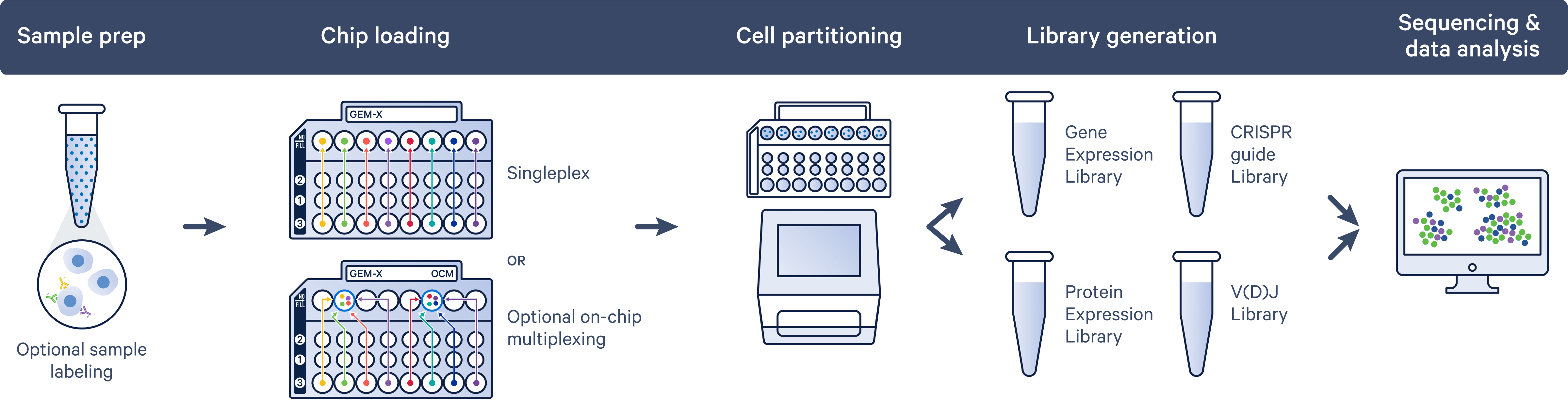
Workflow highlights
Easy on-chip multiplexing option* for lower per-sample costs and limited samples
Run up to 8 samples and up to 40k cells per chip at lower costs with reduced reagent volumes
Batch 4 independent samples per set and collect all partitioned cells in the same recovery well—no extra steps required
Expand capabilities with a species-agnostic approach and lower cell inputs for limited samples (e.g., stem cells or flow-sorted cells)
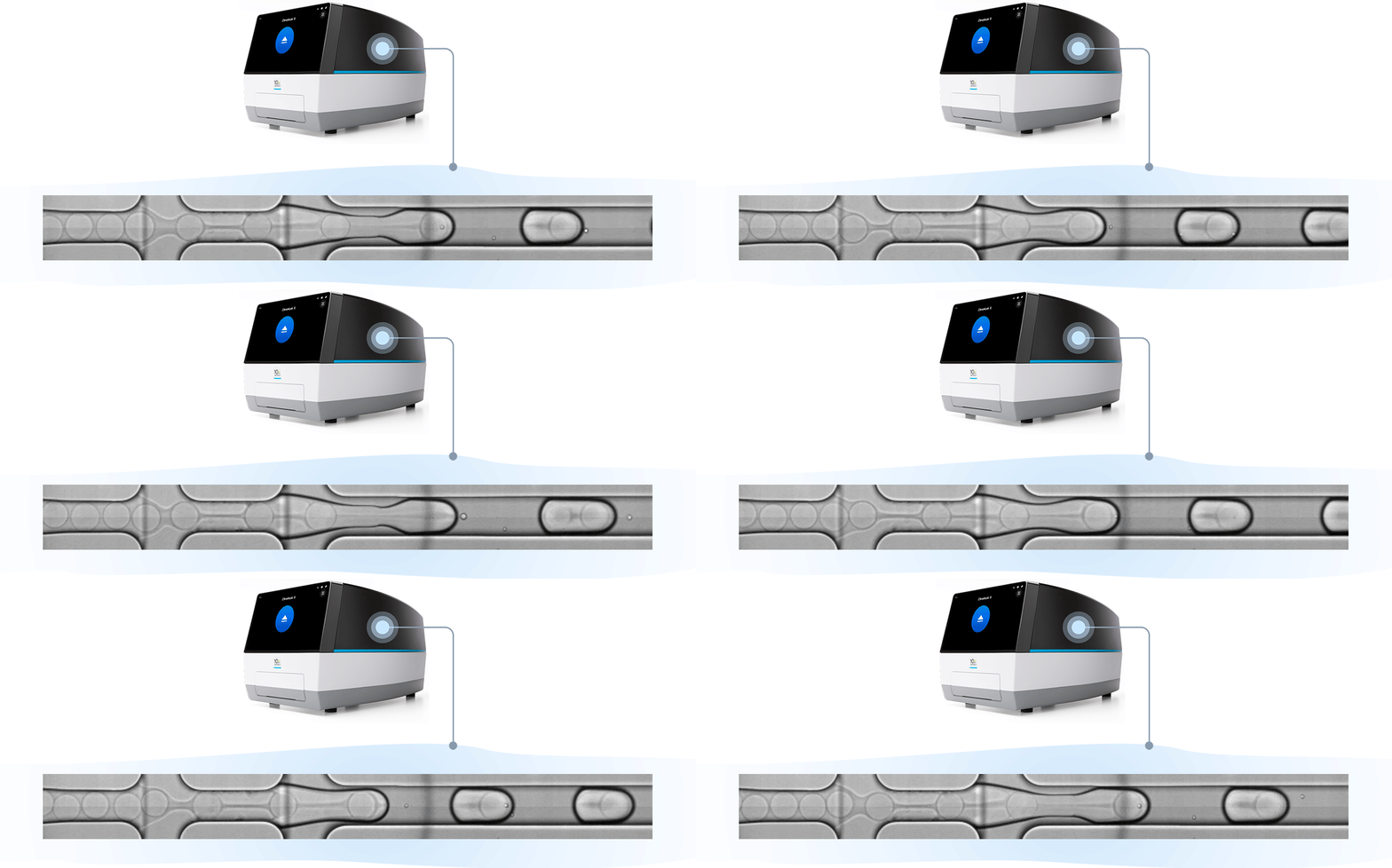
Automated cell partitioning to deliver high performance
Partition and barcode 1 to 8 samples or up to 160k cells per run† (up to 48 samples or 960k samples per kit) in just minutes
Get more from every sample with up to 80% cell recovery, low cell inputs, and capture of fragile cells
Ensure high-quality, consistent performance with an R² of 0.97 across runs, users, and timepoints
Product details

Universal 3’

Universal 5’
Featured resources
Publications
Product Sheet
Grant Resources
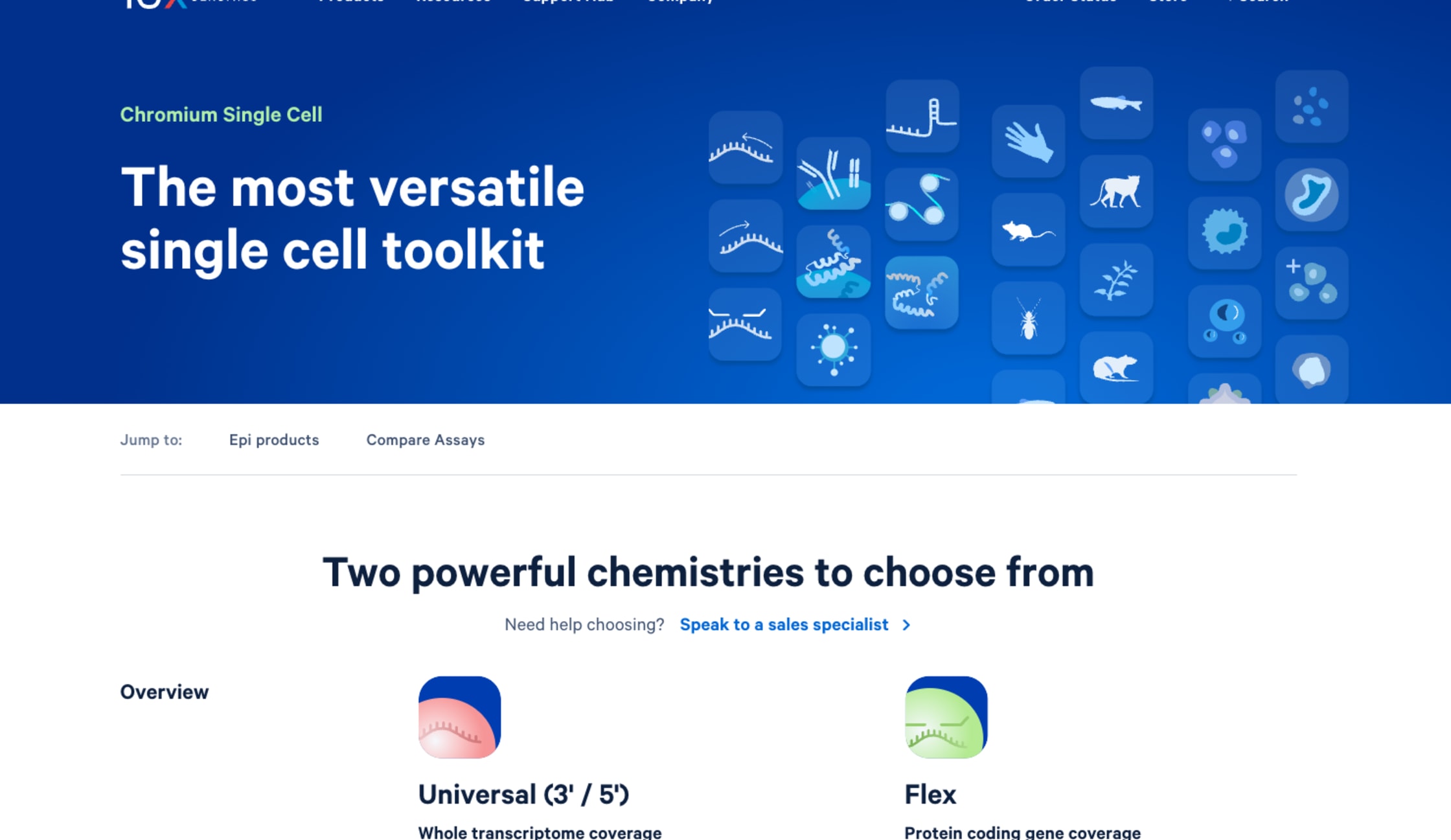
Broad, versatile portfolio of single cell assays
Analyze chromatin accessibility and examine gene regulatory mechanisms with our Epi kits. Take advantage of the ultimate flexibility, scale, and cost efficiency of Flex kits for work with fixed samples (even FFPE) or low-quality RNA, multi-site or longitudinal studies, and convenient workflows that let you fix, batch, and run samples on your schedule.
†More experienced single cell researchers can increase throughput beyond this capacity with Cell Hashing or genetic demultiplexing. Details on Cell Hashing with the 3’ and 5’ kits can be found here and here, respectively.